News dated
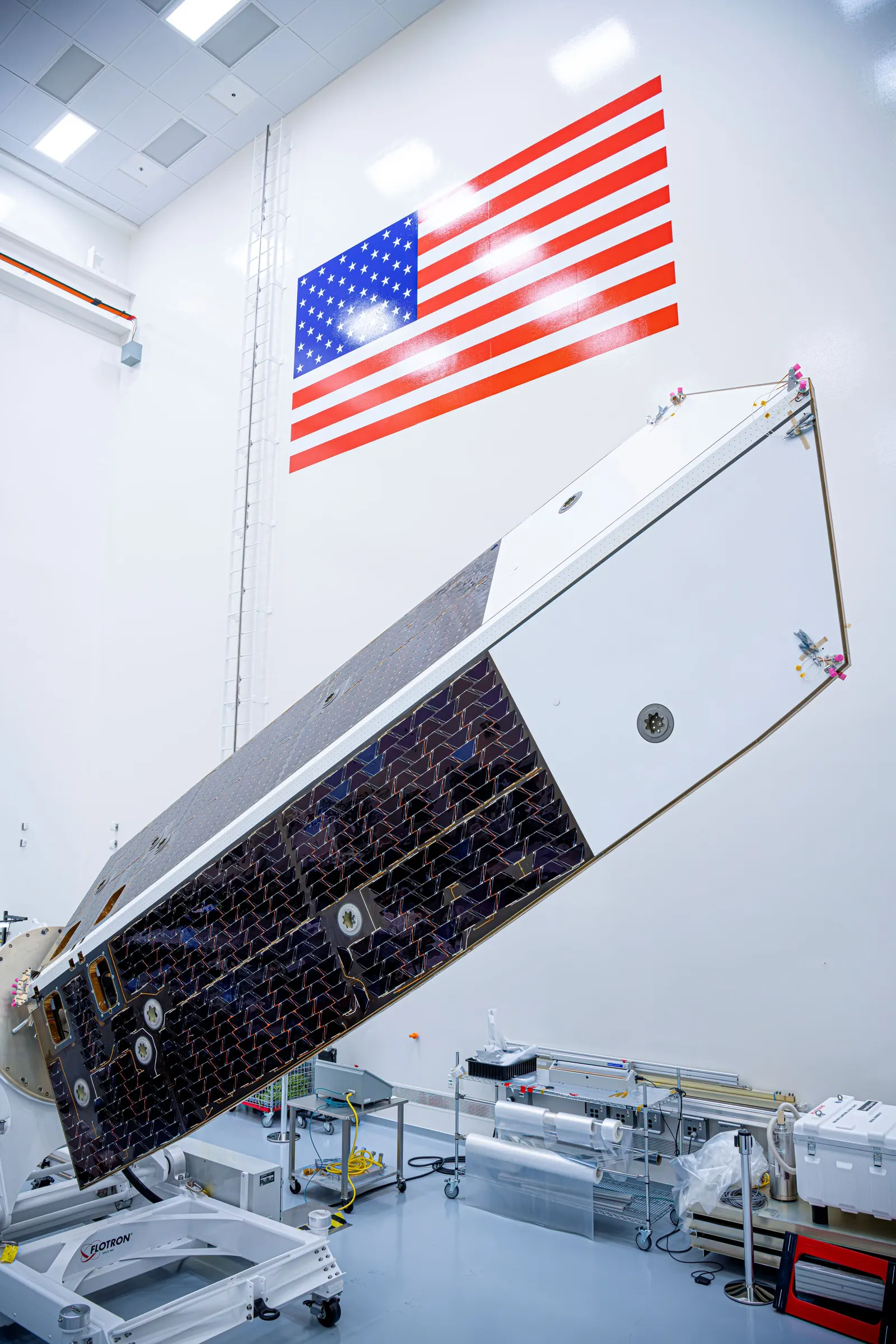
On 8 October, NASA described how SPHEREx studies brown dwarfs, objects without enough mass to sustain the hydrogen fusion typical of stars. The telescope observes the sky in 102 colour bands, from deep red to infrared, distinguishing signals associated with molecules in their atmospheres, including water and methane. [1]
Comparisons between observations and simulations also reveal what models fail to reproduce well, including features related to clouds. The research is available as a July preprint and in a bibliographic record for the October publication. These measurements concern atmospheric chemistry; the presence of water or methane is not presented as a discovery of life. [1][2][3]
The bright side
Comparable measurements across different atmospheres help identify the limits of simulations. A model that does not match the data becomes a question to investigate, rather than an awkward detail to remove. [1][2][3]
One idea, in simple words
A brown dwarf is an object in space without enough mass to work like an ordinary star powered by hydrogen fusion. On 8 October, NASA explained how its SPHEREx telescope observes their atmospheres, which are layers of gas. It separates light into 102 colour bands, some invisible to human eyes, to gather information about those gases. [1]
Water and methane leave recognisable signals in the observed light. Here is an editorial example: just as different colours help you distinguish parts of a drawing, these signals help researchers study molecules. Scientists compare measurements with models, representations built on computers. Differences show what needs to be understood better. Finding these molecules does not mean that living things have been discovered on brown dwarfs. [1][2][3]
A little discovery to keep
What did you discover?
Straight from the source.
- NASA’s SPHEREx Telescope Sees Menagerie of Brown Dwarfs NASA · 8 Oct 2026
- SPHEREx 0.75 to 5 μm Spectra for a Sequence of Nearby Brown Dwarfs Rustamkulov et al. / arXiv · 1 Jul 2026
- SPHEREx 0.75–5 μm Spectra for a Sequence of Nearby Brown Dwarfs IPAC / Caltech · No publication date provided
Original reporting summaries prepared with AI assistance and accessible sources. Our editorial method.