01Design
Latest discovery ·
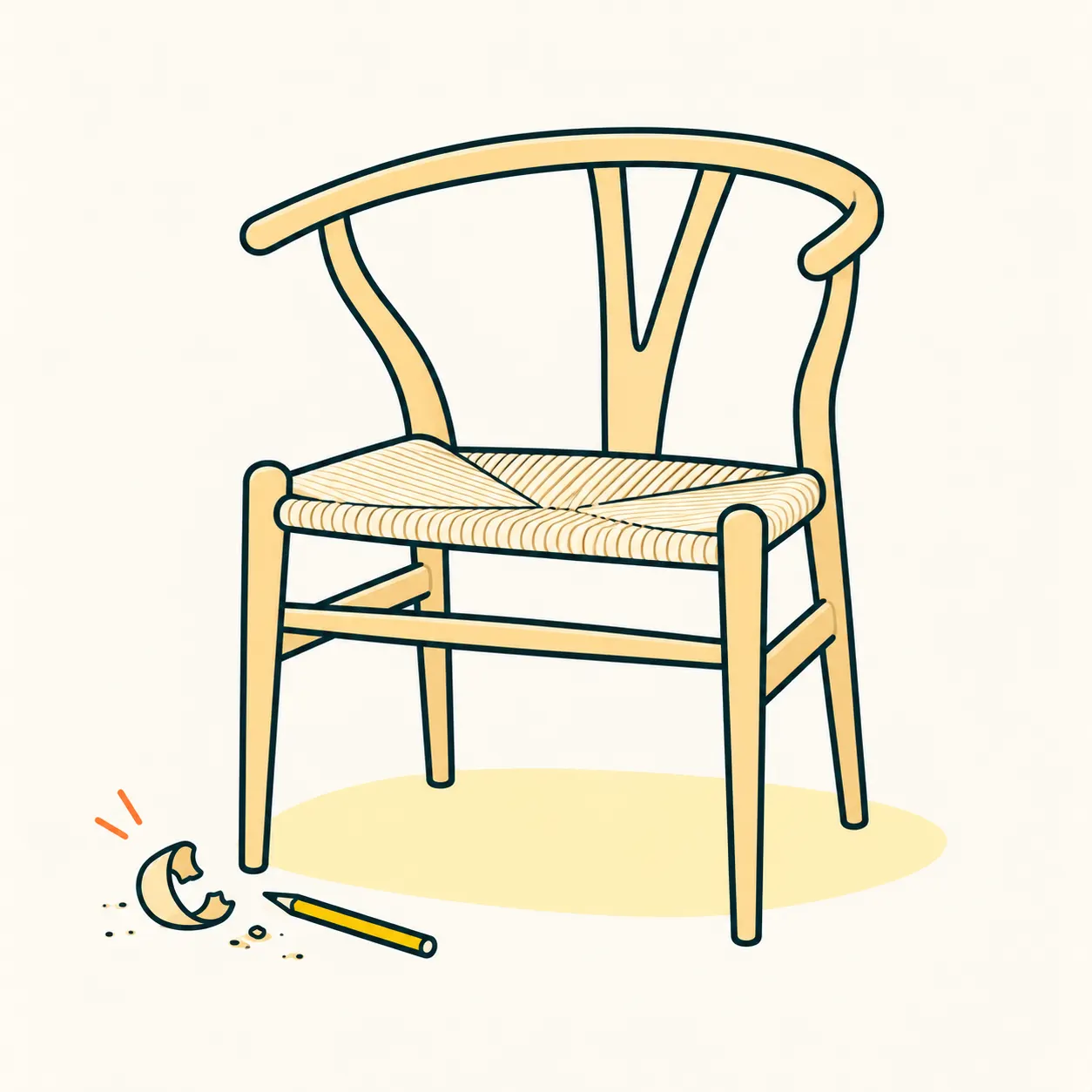
Hans J. Wegner: the Y that helps hold a chair together
The Wishbone Chair connects a memorable shape with construction and the human body, revealing skilled work behind an apparently simple object.
Read the full storyPeople and objects that teach us to look more closely. One design at a time.
49 results
Newest firstLatest discovery ·
The Wishbone Chair connects a memorable shape with construction and the human body, revealing skilled work behind an apparently simple object.
Read the full story
Air Chair reveals how a manufacturing technique can shape an everyday object without turning the finished design into a spectacle.
Read the full story
With Bulb in 1966, Ingo Maurer enlarged a familiar shape and brought an ordinarily functional object into the foreground of design.
Read the full story
Tube Chair separates a chair into rearrangeable elements: a small lesson in designing possibilities without prescribing one fixed position.
Read the full story
Two counterweights and conducting arms turn Tizio into a small lesson: freedom of movement can grow from carefully designed constraints.
Read the full story
A rotating inner shade hides part of the light: the Eclisse lamp makes the act of adjusting it visible.
Read the full story
In shared shelters, paper tubes and curtains show that design also means deciding where another person’s view can stop.
Read the full story
The Pipistrello invites us to see light as part of a room, through height, materials and a distinctly visible presence.
Read the full story
A bowl-shaped seat above a ring: the Bowl chair turns simple geometry into a question about bodies and design.
Read the full story
The Frankfurt Kitchen made movement and domestic effort design questions, while leaving the division of household work open to discussion.
Read the full story
From buttons to ceramic vessels, Lucie Rie explored how form, surface and work could meet in objects used every day.
Read the full story
Harry Bertoia’s Diamond turns metal wires into a seat, making the empty spaces a visible part of the design.
Read the full story
The rings of the Bölgeblick range give an everyday object a clear identity, while stacking brings the design into domestic routines.
Read the full story
A disc, a cylinder and a dome: the Bauhaus lamp shows how to read an object beyond its silhouette.
Read the full story
The Standard chair’s legs are deliberately different: their shapes reveal the structural work hidden inside an everyday object.
Read the full story
In the Velvet and Silk Café, fabric defines space: a design that invites us to look beyond solid walls.
Read the full story
The B3 chair brings metal tubing into the living room: its empty spaces reveal a design decision.
Read the full story
A square is never viewed entirely alone: Albers’s exercises reveal how much its surroundings contribute to what we think we see.
Read the full story
Through metal, movement and photography, László Moholy-Nagy treated light as a material, extending his work onto surrounding walls and into perception.
Read the full story
The No. 14 combines bent wood, few components and disassembled transport: design begins well before someone finally takes a seat.
Read the full story
Overlapping shades do more than create a recognisable silhouette: they organise light, shadows and the position of our eyes.
Read the full story
The Superleggera seems to consist of a few lines: behind that simplicity lie different materials and careful work on its joints.
Read the full story
In his wall-mounted CD player, a hanging cord connects hand and sound: design also means observing things we do without thinking.
Read the full story
Eva Zeisel's ceramics show how different forms can relate to each other: design also involves the space between objects.
Read the full story
A magazine became a poster in 1986 as April Greiman explored computer design while keeping the texture of digital images visible.
Read the full story
The British designer turned plants and colours into textile patterns: recognising a form does not require copying every detail.
Read the full story
An adjustable lamp shows how springs, moving arms and a steady base can work together to solve an everyday problem.
Read the full story
The Butterfly Stool invites us to follow the wood from seat to floor: one shape can do more than one job.
Read the full story
A textile can divide a room while letting light through: start by noticing the materials, the gaps and the weave.
Read the full story
A few shapes can prepare us for a story: his film titles turn movement into a way of giving images meaning.
Read the full story
Letters, pictures and spacing work together in her road signs: the most useful design makes sense before you notice it.
Read the full story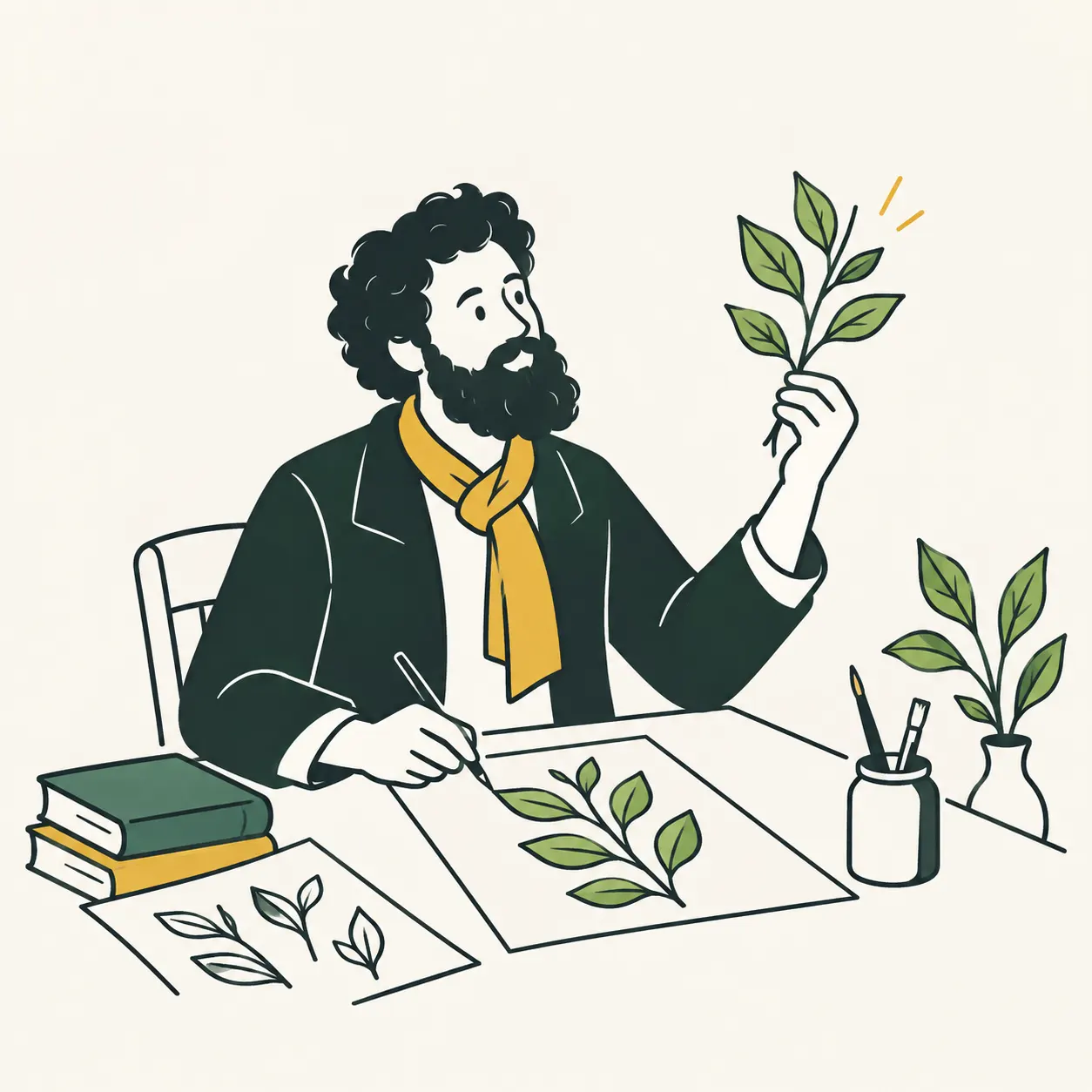
Looking at a plant and inventing a pattern are different activities. William Morris helps us explore the conversation between them.
Read the full story
A mark needs to be recognisable. Paul Rand helps us explore simple shapes, visual play and the value of testing ideas.
Read the full story
A room connects movements, routes and materials. Florence Knoll’s approach began with the people who would actually use the space.
Read the full story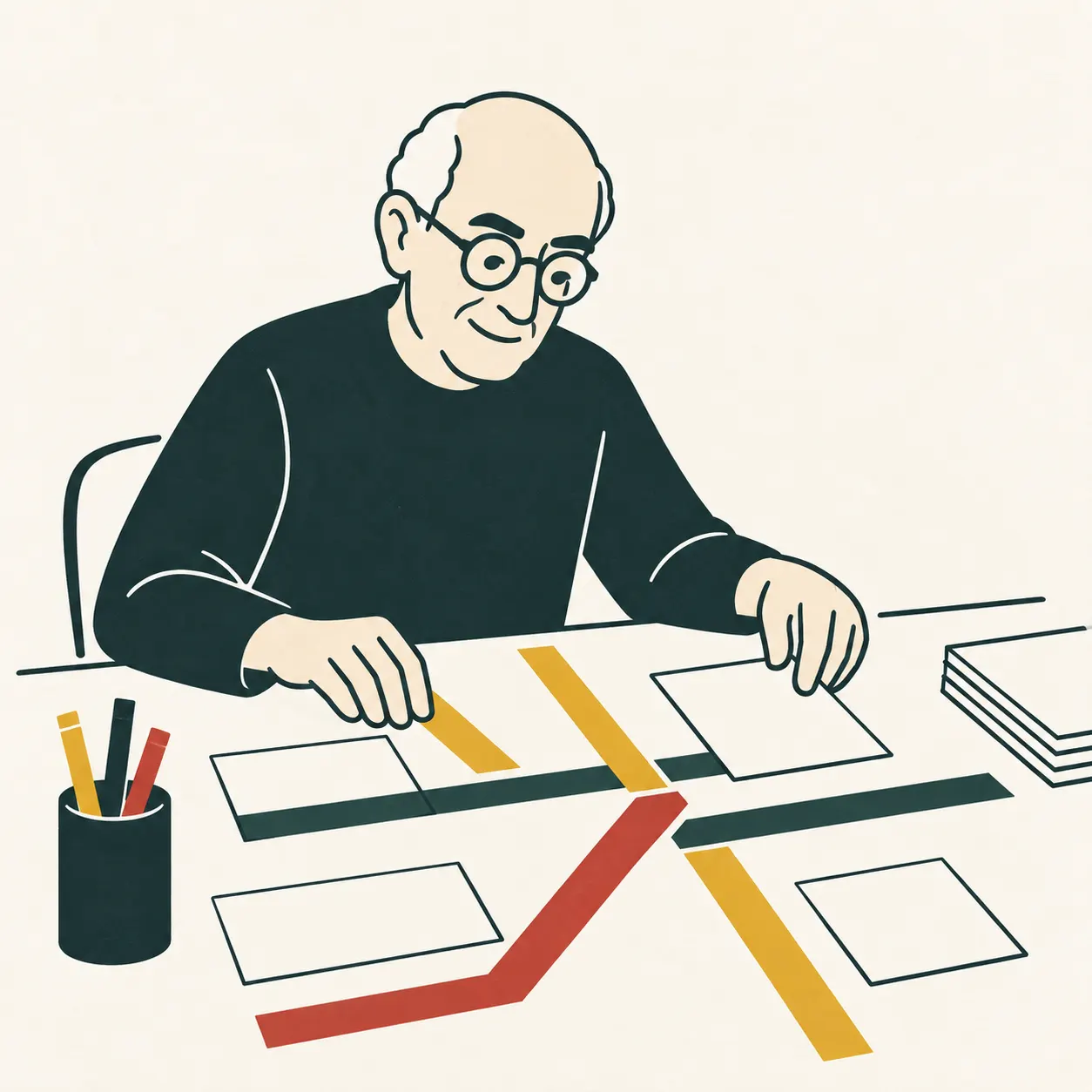
His subway map turns a network into a diagram: connections become clearer, while real walking distances need a different drawing.
Read the full story
A notebook of squares invites us to design small, understandable pictures that can survive the test of another person using them.
Read the full story
The Munich 1972 pictograms show how shared rules and teamwork can make information easier to recognise and use.
Read the full story
The Red Blue Chair brings planes, bars and empty space into conversation. Its famous colours came later: even icons have histories.
Read the full story
A simple piece of furniture becomes a question about design: what do we understand when we help make an object?
Read the full story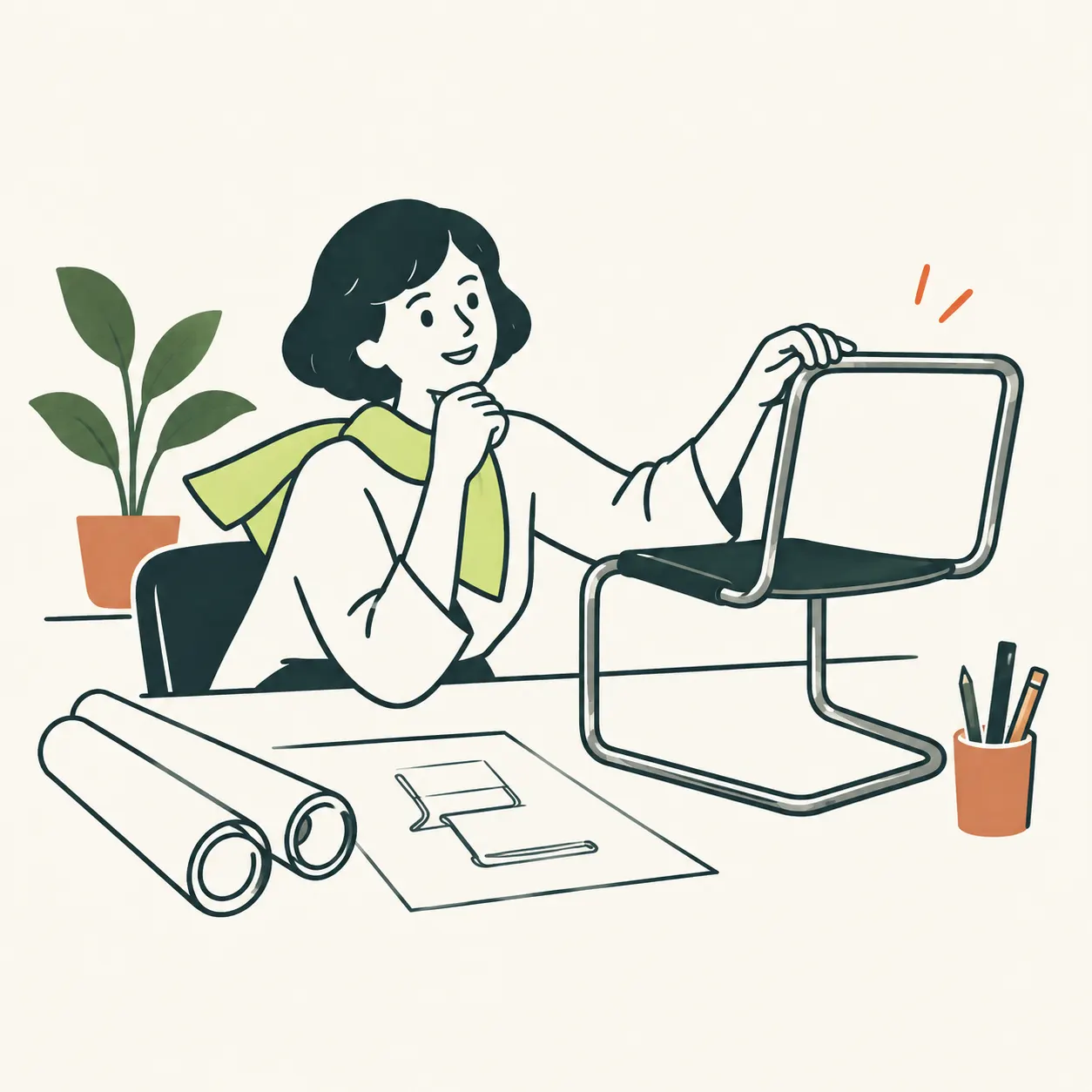
Steel, posture and authorship: two seats reveal design as a practical response to the ways people move and rest.
Read the full story
Charles and Ray Eames turned plywood experiments into useful objects: separating a form into parts can also be progress.
Read the full story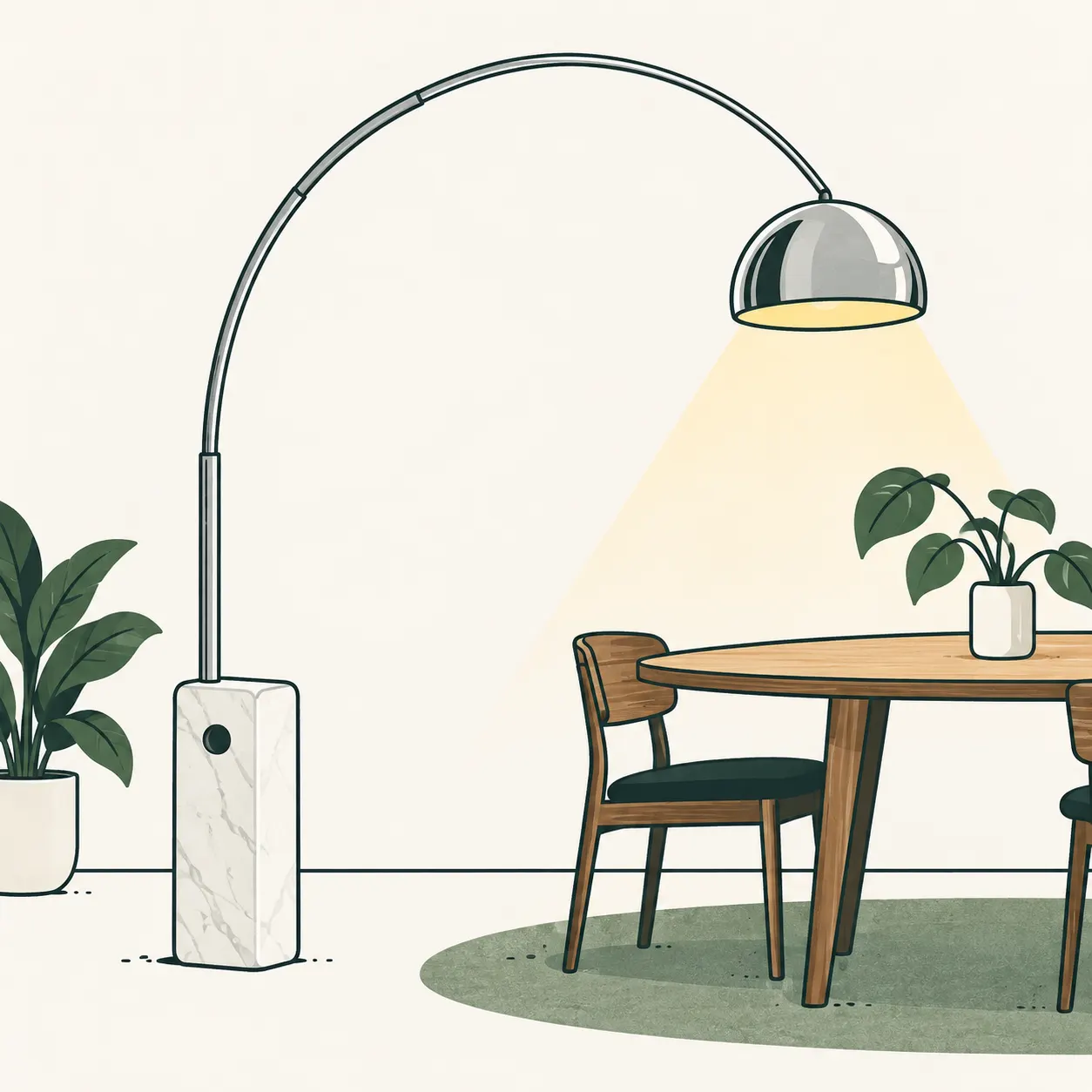
Arco, designed with Pier Giacomo, brings light above a table while allowing the ceiling to stay out of the conversation.
Read the full story
Stool 60 turns a bent wooden leg into a simple, stackable system designed to fit everyday life.
Read the full story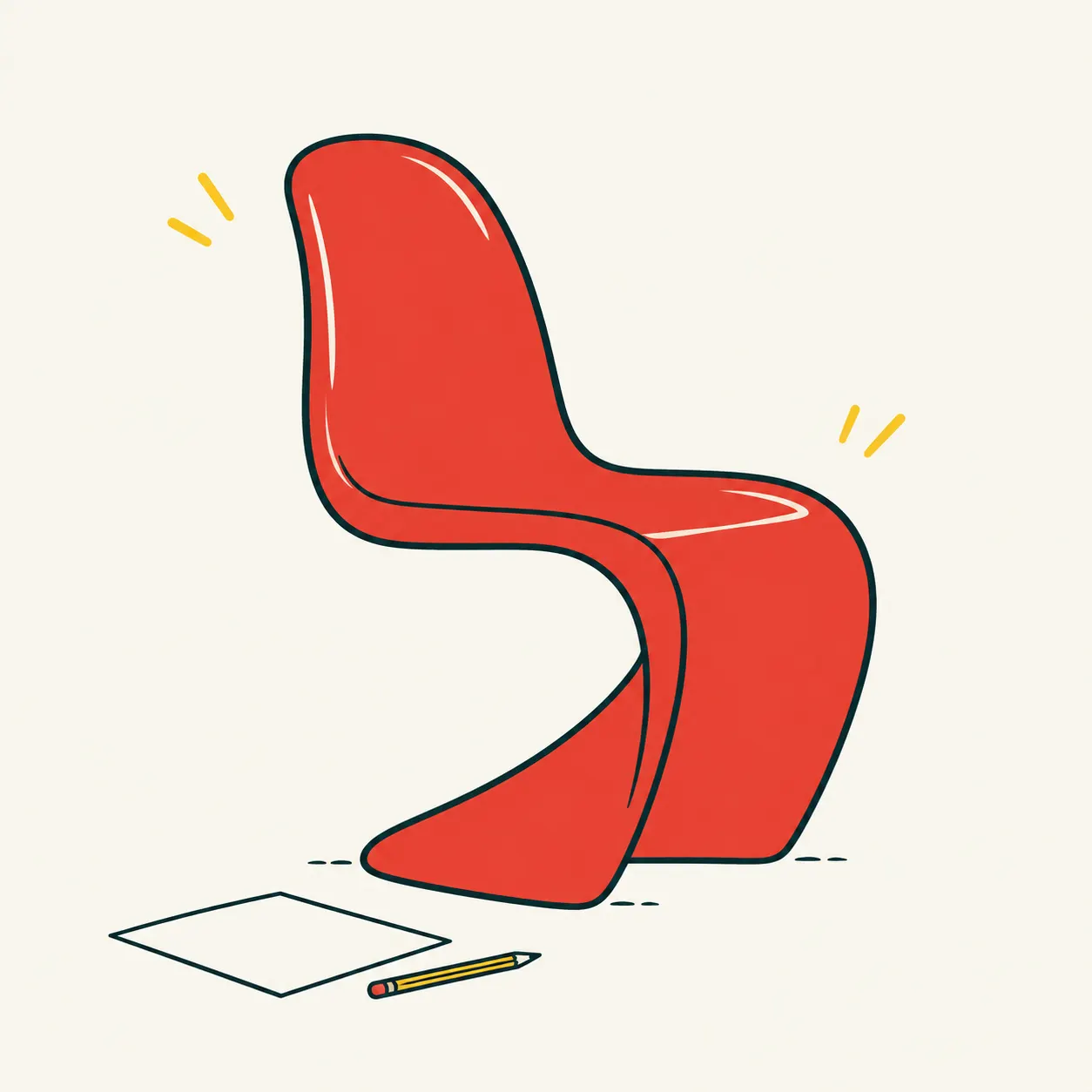
The Panton Chair shows how much work a continuous shape can conceal: one curve, many trials and several different materials.
Read the discovery
An adjustable glass tabletop captures Eileen Gray’s approach to design: begin with everyday gestures, even breakfast in bed.
Read the discovery
With Akari, Noguchi brings paper, bamboo and light together: a lamp can become a sculpture while still doing its everyday job.
Read the discovery
In Marianne Brandt’s small tea infuser, circles and semicircles become everyday gestures: modernism makes it all the way into your cup.
Read the discovery
Lightweight shapes, air and shadows: Munari’s machines invite us to look closely without insisting that everything must produce something.
Read the discovery
From the 606 shelving system to a useful idea: a thoughtfully designed object makes room for the lives we lead.
Read the discoveryIllustrated reads with verifiable sources. Original illustrations made with AI assistance.