News dated
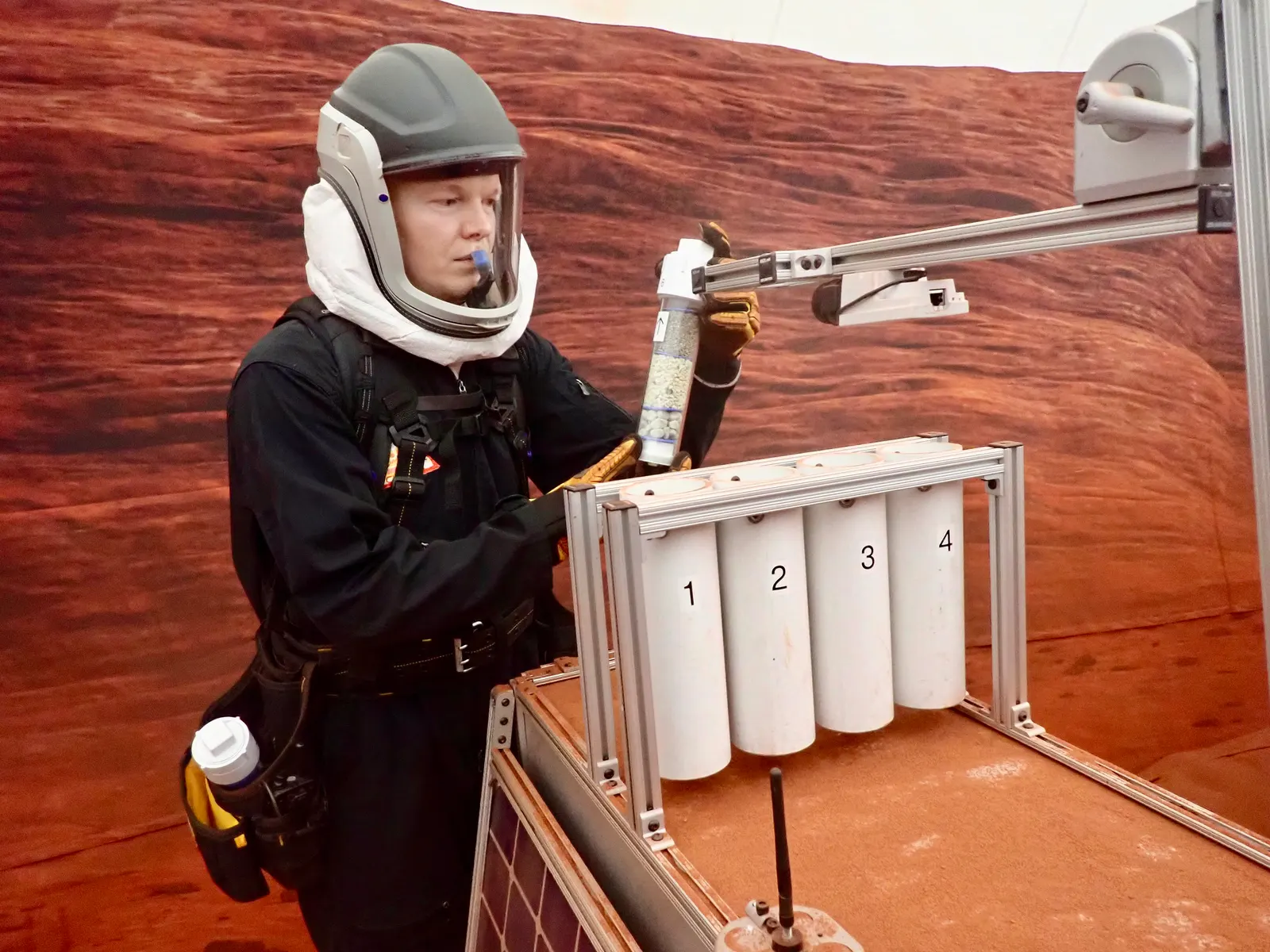
On 19 October, the four participants in the second CHAPEA mission reached one year inside their habitat at Johnson Space Center in Houston. They are on Earth: the setting simulates some challenges of living on Mars. They entered on 19 October 2025; the 378-day mission is scheduled to end on 31 October 2026. [1]
The programme includes growing crops, limited resources, communication delays and simulated activities on the Martian surface. Health and performance data will help researchers investigate future missions’ needs. This milestone records the experiment’s duration; it does not demonstrate that every risk of travelling to Mars has been solved. [1]
The bright side
Simulations allow teams to gain experience and identify operational problems before facing environments that are much farther away and harder to reach. [1]
One idea, in simple words
Four people have spent a year in a special NASA home in Houston, in the United States. They are not on Mars. Their habitat, meaning the place where they live and work, recreates some difficulties they might encounter during a mission to that planet. On 19 October they reached 365 days since entering. During the experiment they grow plants, manage limited supplies and carry out simulated activities. Messages can also arrive late. Imagine asking an important question without receiving an immediate answer: planning matters. The mission is called CHAPEA and is due to finish on 31 October. Researchers will use its data to study life in isolation. Reaching this milestone does not mean every problem of a journey to Mars has already been solved. [1]
A little discovery to keep
What did you discover?
Straight from the source.
- NASA’s Simulated Mars Crew Marks One Year Inside Habitat NASA · 19 Oct 2026
Original reporting summaries prepared with AI assistance and accessible sources. Our editorial method.