EnvironmentThe bright side
Montelupo repairs the Turbone bank damaged by severe weather
Tuscany reports completion of work following erosion in March 2025, near an old landfill.

AI illustration · Positive Times · ImageGen
From the archive: the edition of , with the original dates and sources for every story. Read the latest edition.
Music for today ·Tuscany reports completion of work following erosion in March 2025, near an old landfill.
AI illustration · Positive Times · ImageGen
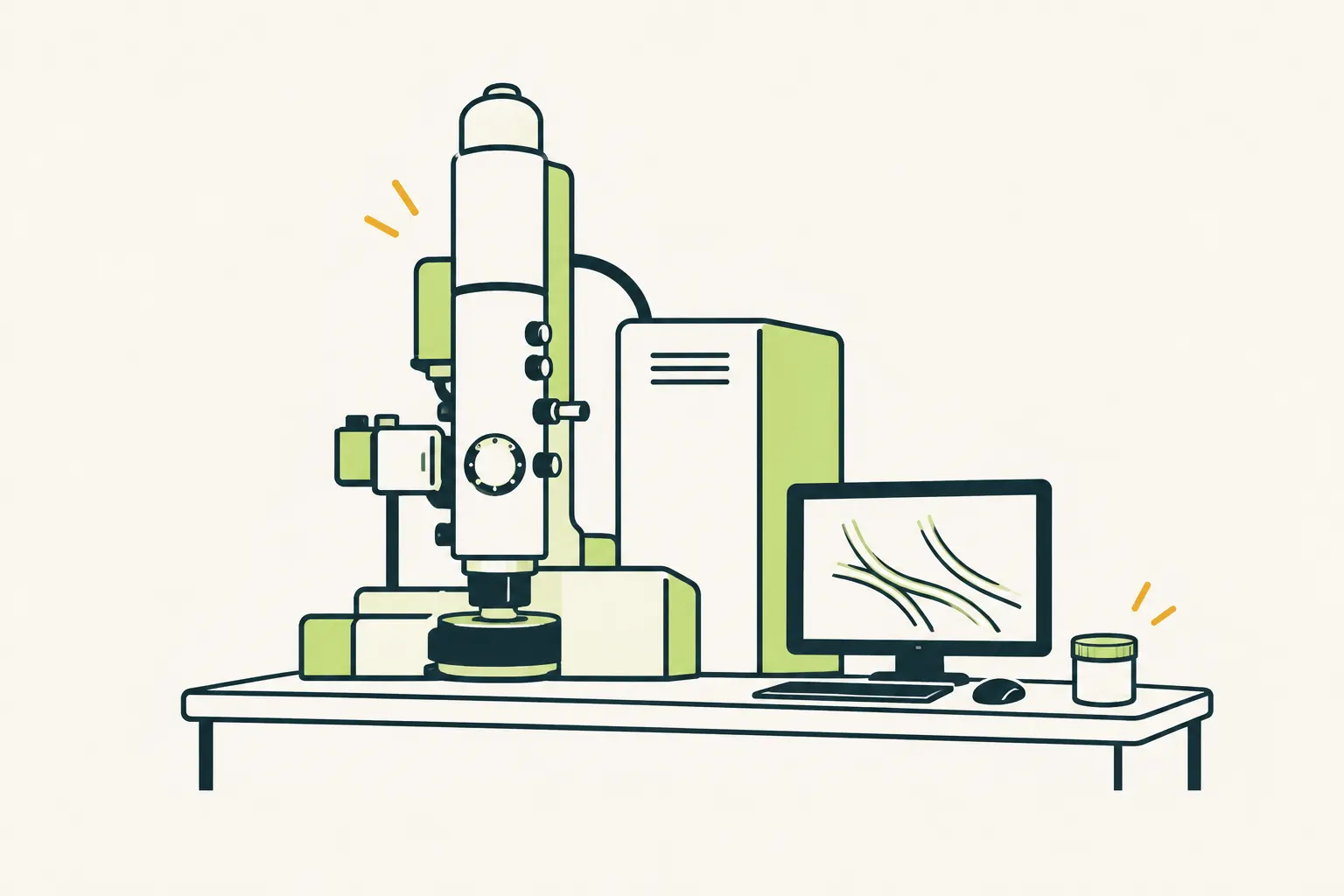
With Japan’s support, the national facility uses electron microscopy to identify very small fibres.
AI illustration · Positive Times · ImageGen
The programme focuses on prevention, collection and recycling; two Bali waterways are pilot sites.
AI illustration · Positive Times · ImageGen
ESA publishes JANUS images from the September 28 Earth flyby, which also helped test the camera.
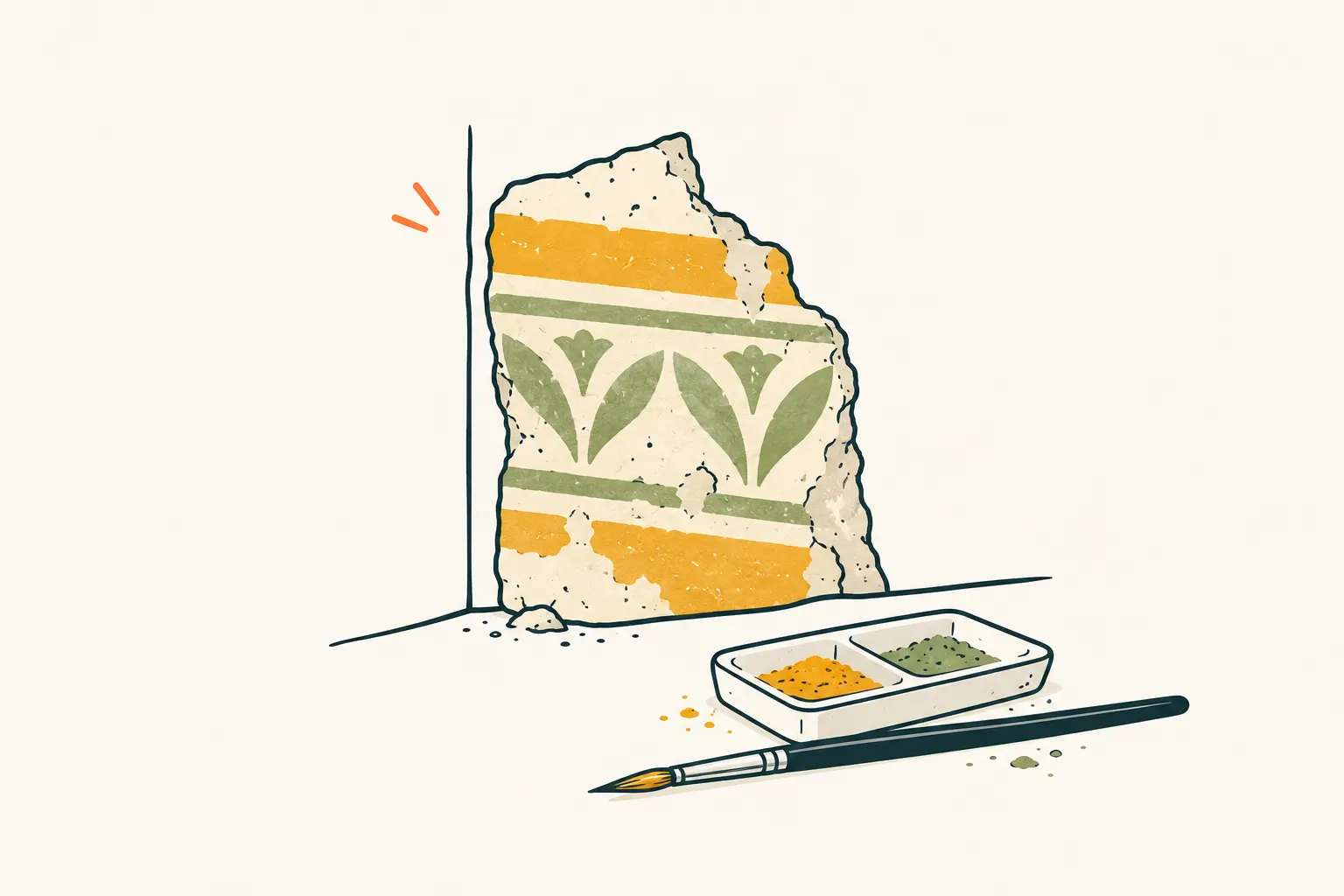
The municipality announces reopening from October 16; work covered the entrance wall and side walls, excluding the apse.
AI illustration · Positive Times · ImageGen
At Florence’s Sala Mehta, the ensemble performed Grieg’s first Peer Gynt suite.
AI illustration · Positive Times · ImageGen
The new route for people aged 16–21 will start in Derby: the places are a future commitment.
AI illustration · Positive Times · ImageGen
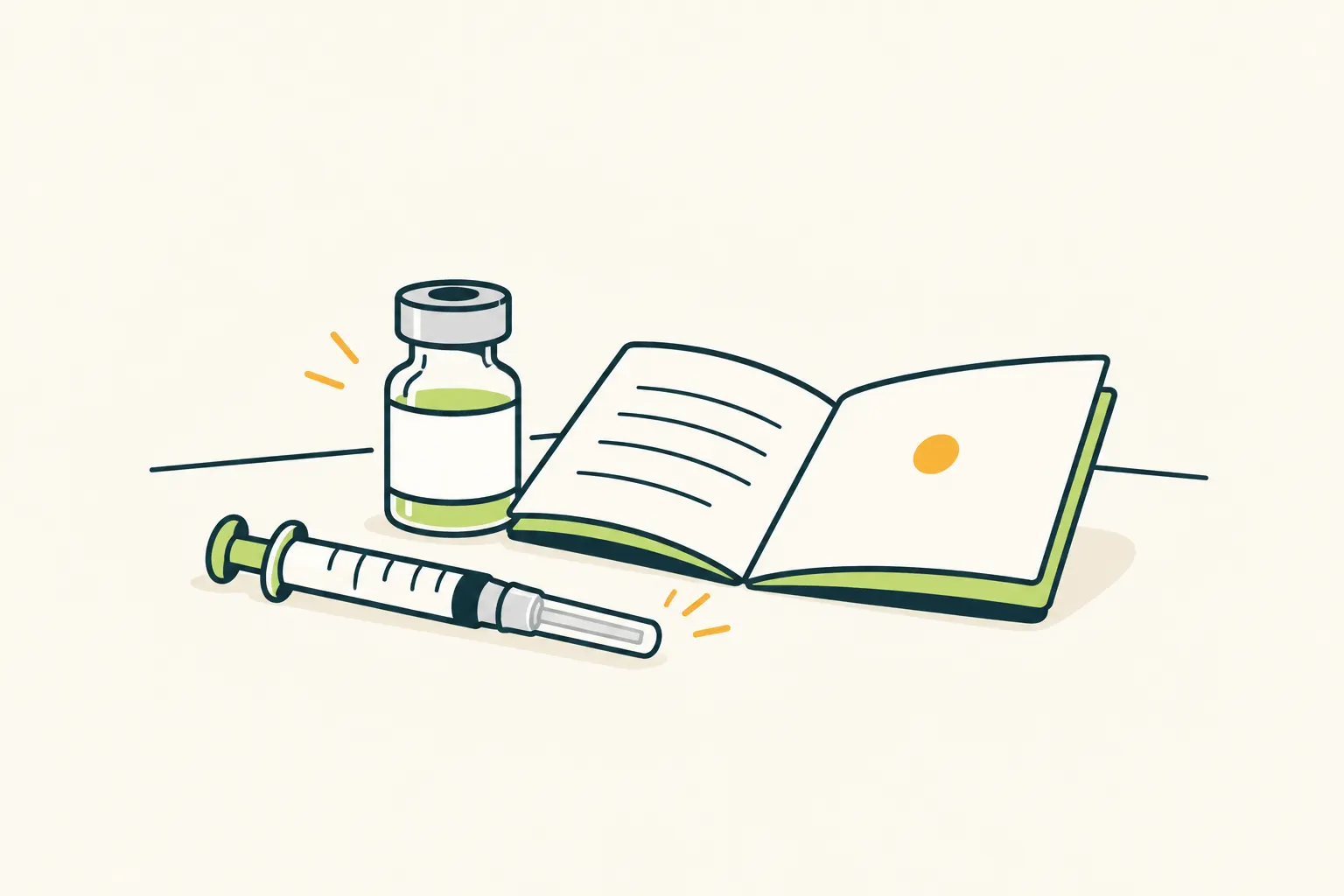
WHO recognises prevention progress: no HBsAg-positive tests were found among the children aged 6–8 surveyed.
AI illustration · Positive Times · ImageGen
Design · Philosophy · Plants · Curiosities · Words. Ideas worth a closer look.

The Frankfurt Kitchen made movement and domestic effort design questions, while leaving the division of household work open to discussion.
Read the full story
A famous sentence asks us to retain experience, but its context distinguishes useful memory from repetition that can no longer adapt.
Read the full story
Asymmetrical leaves, silvery spots and jointed stems describe a particular begonia: identifying it means looking beyond the decorative pattern.
Read the full story
Two spoons in the same room can share a temperature yet feel different: your hand also senses heat on the move.
Read the full story
The Italian name joins Greek elements in a modern construction: it describes a function without containing the device’s entire history.
Read the full storyOriginal illustrations made with AI assistance. Facts and sources stay in plain sight.
 Enlarge the chart
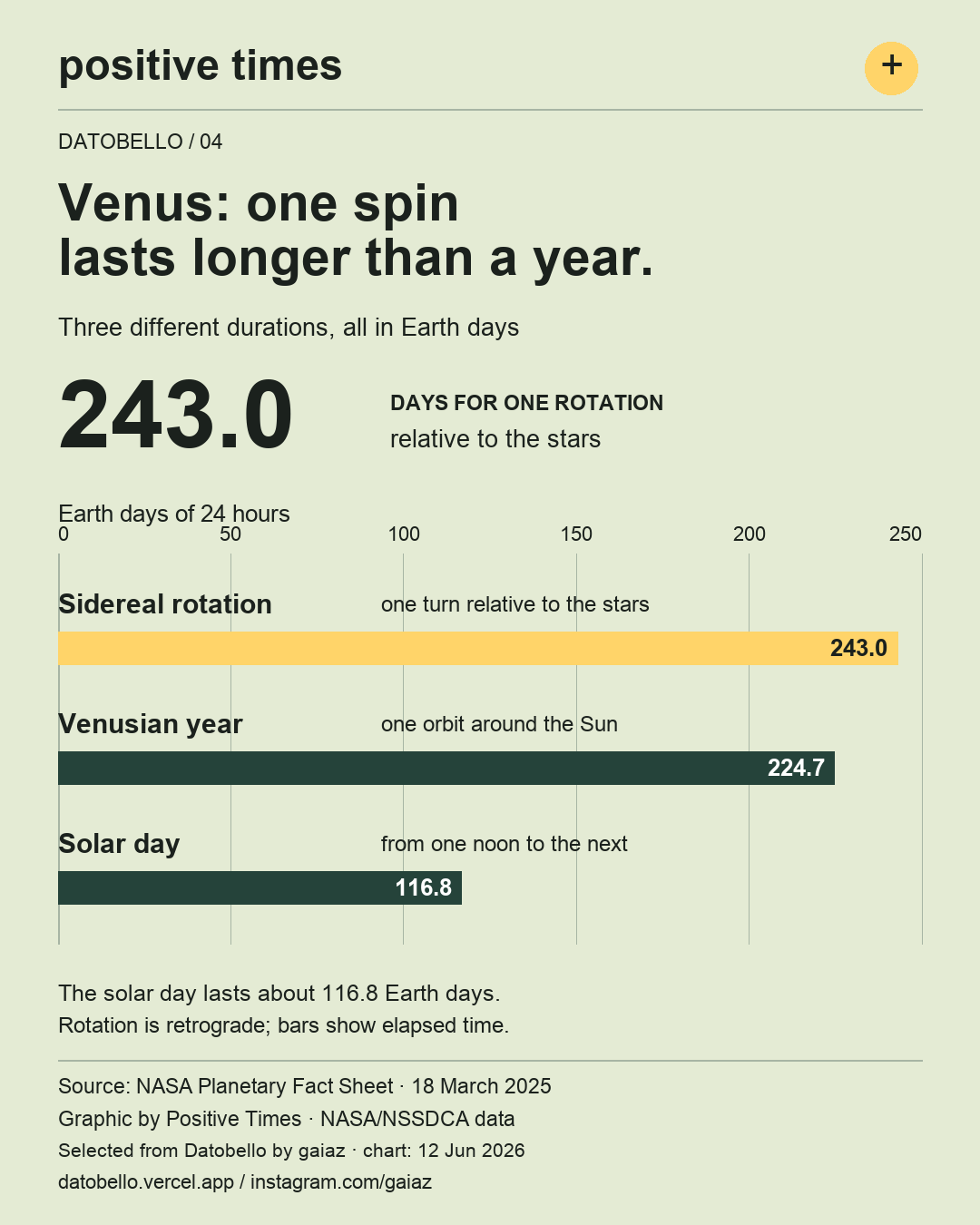
Venus takes about 243.0 Earth days to turn once relative to the stars; its year lasts 224.7. Yet its solar day, from one noon to the next, lasts about 116.8 days. These are three different clocks: the word “day” alone can blur the distinction. [1][2]
The chart converts the durations in NASA’s fact sheet, updated on 18 March 2025, into 24-hour days. The source marks retrograde rotation with a minus sign; the bars show elapsed time and therefore positive values. This is an astronomical comparison, not a new observation made today. [1][2]
A project by gaiaz · Instagram
That is quite a lot of good for one day.
Browse the other editions